
Hinges and Mounting Plates for the Oceanis 40
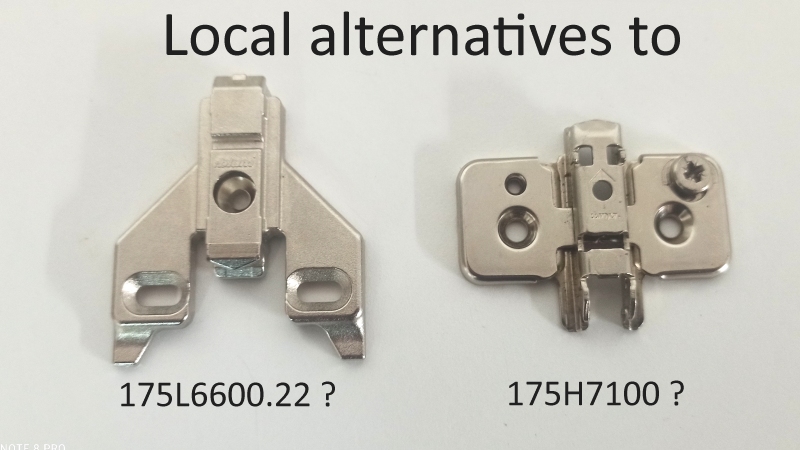
About 10 years ago, while we were in Italy, one hinge of a cabinet broken. I looked around every hardware workshop and was not able to get a replacement. I finally discover that they should be of the brand BLUM and that the exact reference number should be know as there are hundred of pages in the Blum catalogue. The 3-cabin, 2-bathroom Oceanis 40 uses 34 hinges and their corresponding 34 mounting plates. In the following pictures you see the reference numbers and the quantities used in the Oceanis 40.
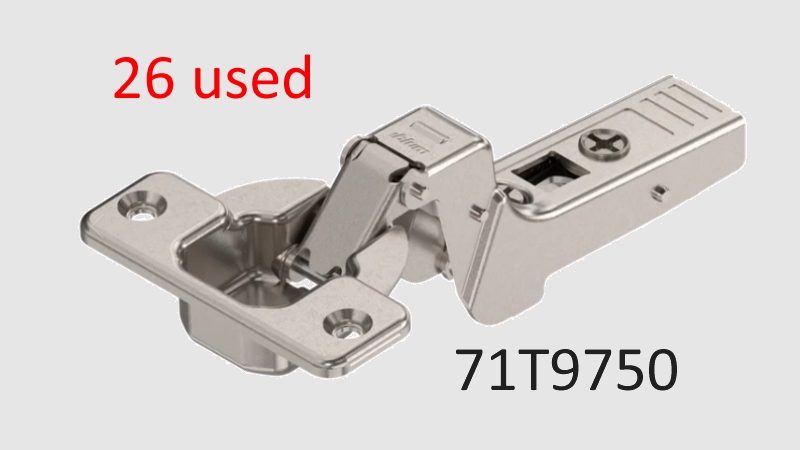 |
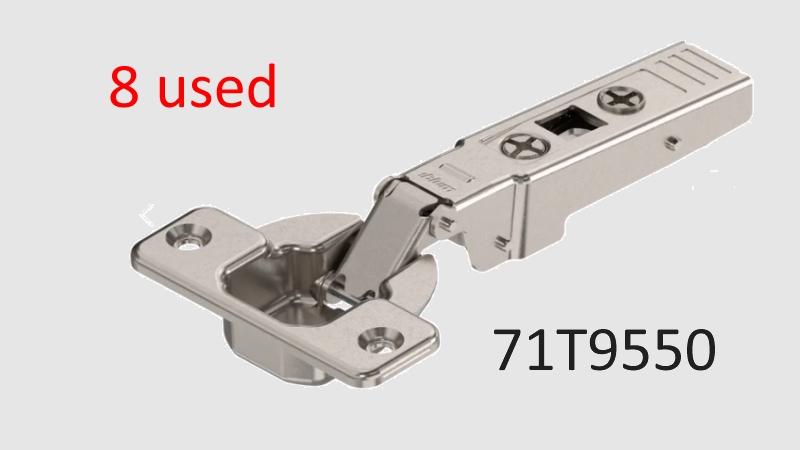 |
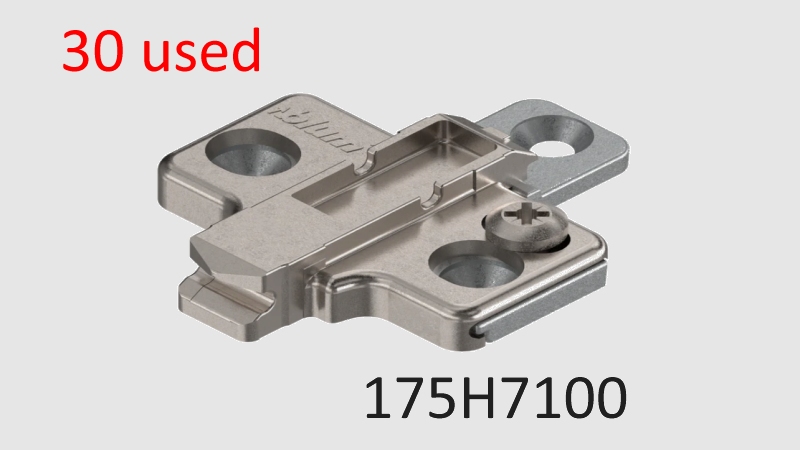 |
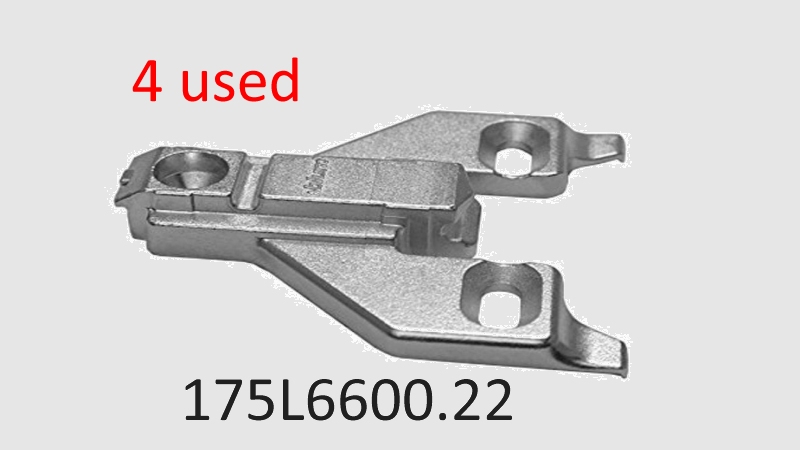 |
I was able to get replacements here in Portugal at a Blum distributor, recently. Some of the replacements were not available or were obsolete and I got the parts shown below which are fully compatible with the referenced to parts (the above numbers were taken from the existing parts in 2015 and the boat was new in 2010). I see that most of these parts are available in web (Amazon, Ebay, etc).
Voltage drop from Batteries to Fridge
I have the original arrangement of the batteries from Beneteau. They consist of a 100AH lead acid starter battery; 2 parallel 140AH lead acid batteries for the service bank and 2 parallel AGM 60AH batteries for the bow thruster. I added a battery monitor to watch the state of the service batteries and a 390W solar panel to charge the service batteries. The starter and the bow thruster batteries are only charged by the shore charger and alternator. I am happy with the solar panels as they are able to recover the energy spent during the night, which is practically due to the refrigerator. However, on very hot days (nights, really), the voltage in the refrigerator may drop below the value that triggers the compressor to shut down. I wrote early this year, in a Facebook group, a post where I was coming to the conclusion that I needed to increase the section of the cable that connects the service batteries to the electrical panel. This was an almost impossible task to do. However, when I left the boat this year to spend the winter at the shipyard, I took more exact measurements. So I got a long end of electrical cable and connected it to the negative terminal of my voltmeter. I permanently connected the other end of the cable to the negative terminal of the service batteries. I turned on the refrigerator and with the solar panels turned off I read a consumption of 6.5A on the monitor. I obtained the following readings:
| Positive terminal of batteries | 12.65 | |
| At terminal of the switch connected to the batteries | 12.65 | 0.00 |
| After the switch going to the loads trough a 100A fuse | 12.60 | 0.05 |
| At the other terminal of the fuse | 12.55 | 0.05 |
| At the positive bar of the distribution panel | 12.40 | 0.15 |
| After the fridge fuse/breaker in the distribution panel | 12.35 | 0.05 |
| At the positive terminal of the fridge compressor | 12.20 | 0.15 |
| At the negative terminal of the fridge compressor | 0.37 | 11.83 |
| At the + terminal of the Beneteau current shunt | 0.25 | 0.12 |
| At the - terminal of the Beneteau shunt and negative switch | 0.24 | 0.01 |
| After the negative battery switch and monitor shunt | 0.01 | 0.23 |
| After the monitor shunt and minus of battery | 0.00 | 0.01 |
My conclusion is that the negative battery switch has a large voltage drop of 0.23V. This switch is identical to the battery switch on the positive side of the batteries which has only a voltage drop of 0.05. Assuming that I can replace the negative switch with one identical to the positive one, the voltage at the fridge would rise from 11.83V to 12.01V which will make a tremendous difference on the operation of the compressor. I just found and ordered in Amazon one of these switches but it has a red handle. I hope I would be able to put the black handle on the new switch. For the moment I gave up the idea of replacing the wires connecting the batteries to the electrical panel.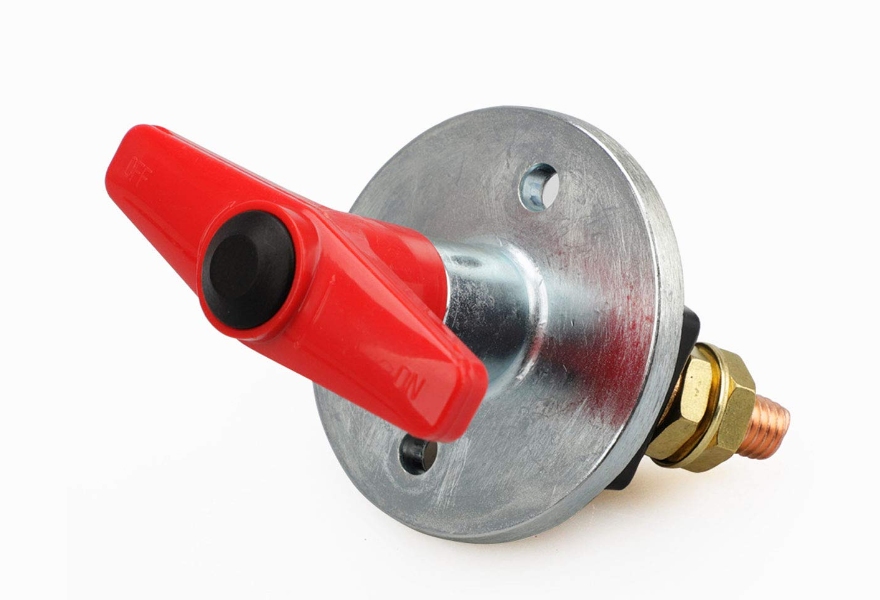
Page 2 of 2